
Transport yourself to the bustling ramen shops of Tokyo without derailing your weight loss journey with this innovative Keto Dashi Ramen. This soul-warming bowl masterfully reimagines the beloved Japanese comfort food by swapping traditional high-carb noodles for light, tender spiralized zucchini that perfectly absorbs the complex flavors of the rich umami broth. The combination of fragrant kombu dashi, tender chicken thighs with crackling skin, and a perfectly jammy soft-boiled egg creates a deeply satisfying meal that honors authentic Japanese flavors while keeping carbs remarkably low. Each spoonful delivers a harmonious balance of textures and tastes – from the silky broth and crispy nori to the tender chicken and al dente zoodles – proving that you don’t need to sacrifice cultural culinary experiences on your keto journey. Whether you’re a longtime keto enthusiast or simply looking for a lighter alternative to traditional ramen, this nourishing bowl delivers all the comfort without the carb-induced sluggishness.
What is Dashi Ramen?
Dashi ramen refers to ramen that specifically highlights dashi as its primary flavor base. Dashi is a fundamental Japanese cooking stock that provides umami flavor and serves as the foundation for many Japanese dishes.
What Makes Dashi Ramen Distinct
Traditional ramen broths are typically categorized into four main types:
Tonkotsu (pork bone)
Shoyu (soy sauce)
Miso (fermented soybean paste)
Shio (salt)
Dashi ramen is somewhat unique because it emphasizes the dashi component rather than fitting neatly into these categories. The dashi brings a distinct umami quality that’s lighter than tonkotsu but still deeply flavorful.
Types of Dashi Used in Ramen
There are several types of dashi that can be used in ramen:
Kombu Dashi: Made from dried kelp, providing a vegetarian/vegan base with subtle ocean flavor.
Katsuo Dashi: Made from dried, fermented, and smoked skipjack tuna (bonito) flakes, giving a smokier, more intense flavor.
Awase Dashi: A combination of kombu and katsuo, creating a balanced broth that’s the most common in Japanese cooking.
Shiitake Dashi: Made from dried shiitake mushrooms, offering an earthy, meaty flavor that’s vegetarian-friendly.
Niboshi Dashi: Made from dried sardines or anchovies, creating a more robust, fishy profile.
Ago Dashi: Made from dried flying fish, popular in certain regions.
Importance for Keto Diets
Dashi ramen is particularly well-suited for keto diets for several reasons:
Naturally low-carb base: Unlike broths that might incorporate higher-carb ingredients, dashi is essentially carb-free while delivering significant flavor.
Umami richness: The intense umami flavor creates satisfaction without needing added sugars or carbs for taste enhancement.
Compatibility with keto ingredients: Dashi pairs exceptionally well with fatty ingredients like chicken thighs, soft-boiled eggs, and healthy oils.
Flexibility: Can be adapted to include more fat (with added butter, MCT oil, etc.) to better fit keto macros.
Nutrient density: Particularly when made with kombu, dashi provides minerals like iodine and other trace elements beneficial for thyroid function and metabolism.
Simplicity: Creates a flavorful base without complicated ingredients that might hide carbs.
When combined with zucchini noodles or other keto-friendly noodle alternatives (shirataki, etc.), dashi ramen offers the comfort and flavor profile of traditional ramen while maintaining the low-carb requirements of a ketogenic diet. The depth of flavor in dashi helps create the perception of a hearty, satisfying meal despite the absence of traditional wheat-based noodles.
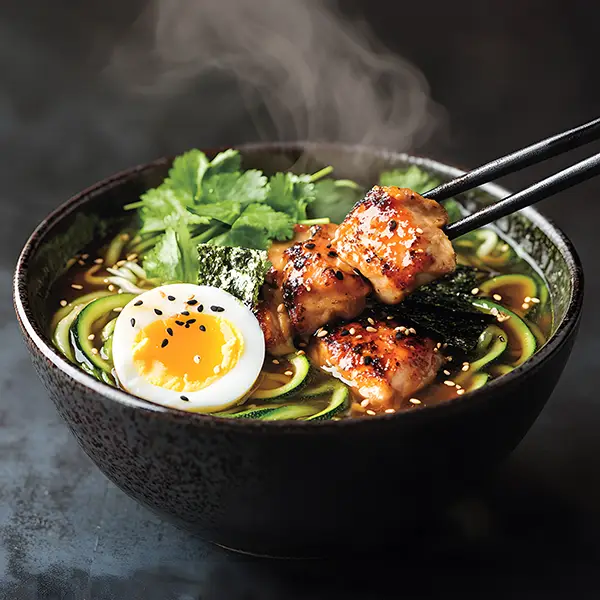
Ultimate Keto Zucchini Noodle Ramen: The Game-Changing Recipe That Transforms Your Body
Description
Ingredients:
For the Bone Broth Base:
8 cups chicken bone broth (homemade preferred)
3 pieces dried kombu (about 4x4 inches each)
1/4 cup dried shiitake mushrooms
2 tablespoons coconut aminos
1 tablespoon sesame oil
1 tablespoon rice vinegar (unsweetened)
1 tablespoon white miso paste (ensure it's low-carb)
1 tablespoon grated fresh ginger
3 garlic cloves, minced
1 tablespoon erythritol or monk fruit sweetener (optional)
For the Toppings:
4 large eggs
4 boneless, skin-on chicken thighs
2 tablespoons avocado oil
4 medium zucchini, spiralized
2 cups bean sprouts
4 green onions, thinly sliced
1 sheet nori, cut into strips
1/4 cup fresh cilantro leaves
1 jalapeño, thinly sliced (optional)
2 tablespoons toasted sesame seeds
1 tablespoon chili oil (for serving, optional)
For the Chicken Seasoning:
1 tablespoon toasted sesame oil
1 tablespoon coconut aminos
1 teaspoon garlic powder
1/2 teaspoon sea salt
1/4 teaspoon white pepper
Instructions:
For the Broth:
In a large pot, combine chicken bone broth, kombu, and dried shiitake mushrooms. Bring to a simmer over medium heat.
Simmer gently for 15 minutes, then remove and discard the kombu (leaving it too long can create a bitter taste).
Continue simmering for another 15 minutes, then remove the mushrooms. Slice them thinly and reserve for topping.
Whisk in the coconut aminos, sesame oil, rice vinegar, miso paste, grated ginger, minced garlic, and sweetener (if using).
Reduce heat to low and keep warm while preparing other components.
For the Soft-Boiled Eggs:
Bring a medium pot of water to a boil.
Gently lower eggs into the boiling water and cook for exactly 6 minutes.
Immediately transfer to an ice bath to stop cooking.
Once cooled, peel carefully and slice in half lengthwise.
For the Chicken:
Preheat oven to 400°F (200°C).
Mix all chicken seasoning ingredients in a small bowl.
Pat chicken thighs dry and rub with the seasoning mixture.
Heat avocado oil in an oven-safe skillet over medium-high heat.
Place chicken thighs skin-side down and cook for 5 minutes until skin is crispy.
Flip thighs and transfer skillet to preheated oven.
Roast for 15-18 minutes or until internal temperature reaches 165°F (74°C).
Let rest for 5 minutes, then slice.
For the Zucchini Noodles:
Using a spiralizer, create zucchini noodles (zoodles).
Spread zoodles on paper towels and sprinkle lightly with salt. Let sit for 10 minutes to draw out excess moisture.
Pat dry with additional paper towels.
Just before serving, quickly blanch zoodles in boiling water for 30 seconds, then drain thoroughly.
To Assemble:
Divide zucchini noodles among four bowls.
Ladle the hot broth over the noodles.
Arrange sliced chicken, halved eggs, bean sprouts, sliced mushrooms, and jalapeño (if using) on top.
Garnish with green onions, cilantro, nori strips, and sesame seeds.
Drizzle with chili oil if desired.
Serving Suggestions & Meal Prep Tips
For meal prep, store broth, chicken, eggs, and toppings separately. Only spiralize zucchini just before serving to prevent sogginess.
The broth can be made up to 3 days ahead and stored in the refrigerator.
Prepare soft-boiled eggs in advance and store them unpeeled in the refrigerator for up to 2 days.
For a spicier version, add a tablespoon of sugar-free gochujang or sriracha to the broth.
Add a slice of grass-fed butter to the hot broth for extra richness and fat content.
For a vegetarian version, use shiitake mushroom broth and top with pan-fried tofu.
Serve with additional coconut aminos and sesame oil on the side for customizing flavor.
To increase fat content for keto, add sliced avocado as a topping.
Nutritional Values (per serving, assuming 4 servings)
Calories: 490
Fat: 32g
Protein: 38g
Net Carbs: 7g
Fiber: 3g
Total Carbs: 10g
Sodium: 950mg
Potassium: 780mg
Vitamin A: 20% DV
Vitamin C: 35% DV
Calcium: 8% DV
Iron: 15% DV
Cholesterol: 255mg
