
There’s something magical about a peanut butter and jelly sandwich—it’s the flavor of childhood, after-school snacks, and comfort food in its purest form. Now, you can relive that joy while staying keto! This version of the classic PB&J uses low-carb bread, natural peanut butter, and a homemade chia jam that’s both fruity and sugar-free. It’s nostalgic, satisfying, and 100% keto-friendly.
The Rise of the Peanut-Butter-and-Jelly Sandwich
1895 — Dr. John Harvey Kellogg patents a therapeutic “peanut paste” for patients at his Battle Creek sanitarium.
1904 — Peanut butter makes its public splash at the St. Louis World’s Fair, vaulting from health-food curiosity to mainstream snack.
1901
Home-economist Julia Davis Chandler publishes the earliest known PB&J recipe in The Boston Cooking-School Magazine, pairing peanut butter with currant or crab-apple jelly and calling the creation “delicious… and original.”
1917
Entrepreneur Paul Welch perfects a canning method for Concord-grape jelly (sold to the U.S. Army as “Grapelade”), making a sweet, shelf-stable companion for peanut butter.
World Wars I & II (1918-1945)
Peanut butter, grape jelly, and bread all appear in military rations; soldiers mash them together for quick protein and energy, then bring the habit home.
1922 – 1932
Chemist Joseph Rosefield develops the first hydrogenated “no-separation” peanut butter (1922) and later markets it as Skippy (1932), giving PB a creamy texture and long shelf life.
1928
Inventor Otto Rohwedder debuts the commercial bread-slicing machine; pre-sliced loaves make putting a PB&J together child’s play—hence the saying “the greatest thing since sliced bread.”
Great Depression (1930s)
Inexpensive plant protein (peanut butter) + budget-friendly jelly + mass-produced sliced bread equals an affordable, filling meal for families and school cafeterias.
Post-War Boom (1950s-1970s)
Heavy kid-focused advertising and nationwide school-lunch programs cement PB&J as a childhood staple—an average American kid reportedly eats about 1,500 of them before graduation.
Convenience Era (1968-1999)
1968 — Smucker’s releases Goober Grape, swirling PB and jelly in one jar.
1999 — Uncrustables hit freezer aisles, sealing PB&J inside crust-free, grab-and-go pockets.
2000s – Today
April 2 is celebrated as National Peanut Butter & Jelly Day; new mash-ups (from PB&J-flavored snacks to candy cups) show the sandwich’s staying power in a multi-billion-dollar industry.
Why the Combination “Works”
Complete protein: Pairing a legume (peanut) with grain (bread) supplies all essential amino acids.
Shelf stability: Hydrogenation, pectin-rich jellies, and sliced-bread wrapping let ingredients travel far without refrigeration.
Sweet-salt balance: Jelly’s fruit sugars offset peanut butter’s roast-salt notes, creating the classic craveable contrast.
Cultural Footprint
Idiomatic fame: “Better than sliced bread” and “sticks like peanut butter” entered American slang thanks to PB&J’s ubiquity.
Space food: Astronauts ate tortilla-wrapped PB&J on several Shuttle missions because crumbs are minimal.
Global spins: Australia favors peanut butter with honey; Brazil pairs it with banana; Sweden mixes it with lingonberry jam.
Fun Numbers
2,000+ PB&Js the average American reportedly eats in a lifetime.
National Day Calendar
One acre of peanuts can make ~30,000 sandwiches. (National Peanut Board estimate)
National Peanut Board
From a spa delicacy in 1901 to a lunch-box legend, the peanut butter and jelly sandwich is barely 120 years old—yet it’s woven so deeply into U.S. food culture that it feels timeless.
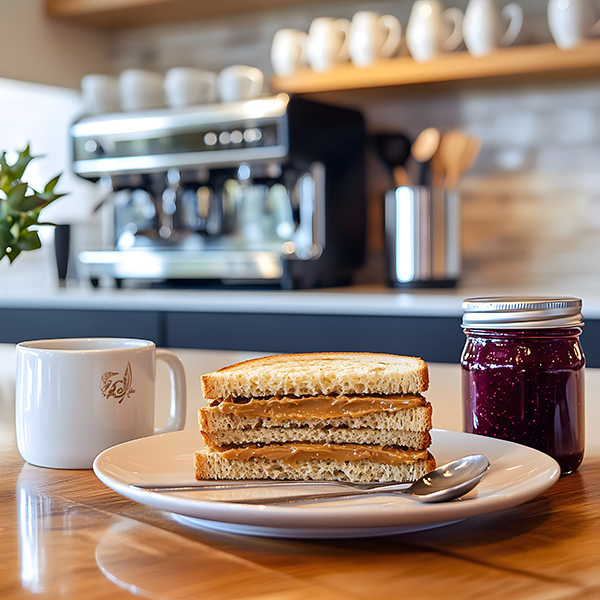
The Ultimate Keto PB&J Recipe with Homemade Chia Jam
Description
Ingredients:
Bread (Choose One):
Option 1: Store-Bought Keto Bread
2 slices Sola, Hero, or Base Culture bread (under 3g net carbs per slice)
Option 2: 90-Second Microwave Bread
1 tbsp almond flour
1 tbsp coconut flour
1 tbsp melted butter
1 egg
½ tsp baking powder
Filling:
2 tbsp natural peanut butter (no sugar added)
2 tbsp chia seed jam or store-bought keto jam
Chia Seed Jam Ingredients:
½ cup strawberries or raspberries (fresh/frozen)
1 tbsp chia seeds
Sweetener to taste (monk fruit, allulose, or erythritol)
Instructions:
Make Bread (if using microwave version):
Mix all bread ingredients in a greased ramekin or mug. Microwave for 90 seconds. Let cool, slice in half.
Make Chia Jam (if using homemade):
Simmer berries on low heat until soft (about 5 minutes). Mash with a fork, stir in chia seeds and sweetener. Chill 30 minutes to thicken.
Assemble:
Toast keto bread if desired. Spread 1 tbsp peanut butter on one slice and 1 tbsp jam on the other. Combine and enjoy!
Serving Suggestions & Meal Prep Tips
Cut into halves or quarters for easy lunchbox snacks.
Make chia jam in advance and store for 5–7 days in the fridge.
Pair with keto-friendly almond milk or coffee for a satisfying breakfast.
Cooking Temperature: Microwave bread on
HIGH (900–1000W)
Estimated Cost: $2.50–$4 per sandwich
Nutritional Values (Approximate):
Net Carbs: 4–6g
Fat: 16–20g
Protein: 8–12g
Fiber: 6–9g
