
Experience a burst of umami with this keto-friendly twist on a Japanese izakaya favorite. These Chicken Yakitori Skewers are marinated in a savory-sweet glaze using coconut aminos and grilled to perfection. Paired with nutty sesame cauliflower rice, this low-carb comfort dish is rich in flavor, easy to prepare, and perfect for dinner any night of the week—no need for takeout when keto tastes this good!
History of Japanese Izakaya
Izakaya (居酒屋), often translated as “Japanese pubs” or “drinking houses with food,” have been a staple of Japanese social culture since the Edo period (1603–1868). The word combines “i” (to stay) and “sakaya” (sake shop), meaning a place where customers could stay and drink, rather than just purchase alcohol to go.
Originally, sake vendors began offering small bites of food to encourage patrons to linger and drink more—this evolved into full menus of shared plates. Izakayas became popular gathering spots for samurai, tradesmen, and merchants after a day’s work. Over time, they became social hubs across Japan, offering a casual, welcoming atmosphere for coworkers, friends, and even solo diners.
Today’s izakayas range from small, family-run shops to modern chains. Signature dishes include grilled skewers (like yakitori), sashimi, tempura, karaage, and low-carb favorites like grilled vegetables or tofu. They continue to reflect the essence of Japanese hospitality, comfort food, and community.
History of Yakitori Skewers
Yakitori (焼き鳥), meaning “grilled bird,” is a beloved Japanese street food that dates back to the Heian period (794–1185) but didn’t rise to popularity until the Meiji era (1868–1912), when meat consumption became more accepted in Japanese society.
Initially, chicken was a luxury item and yakitori was reserved for the wealthy. But by the early 20th century, as more people began eating meat, yakitori stands emerged in urban areas, particularly near train stations and entertainment districts. These vendors offered bite-sized chicken pieces skewered on bamboo sticks, grilled over hot charcoal, and basted with a savory-sweet tare sauce or simply seasoned with salt (shio).
Yakitori became a symbol of working-class comfort food—quick, flavorful, and inexpensive. It was especially common in izakayas, where people gathered to unwind after work with skewers and drinks.
Today, yakitori is celebrated both as a culinary art form (with chefs specializing in nose-to-tail chicken cuts) and as an everyday street food enjoyed across Japan and beyond.
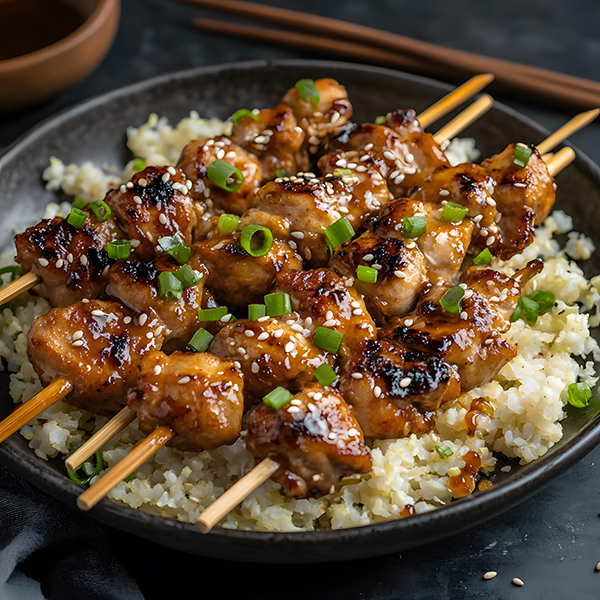
Flavor-Packed Keto Yakitori Skewers for an Easy Weeknight Dinner
Description
Servings: 2 | Prep Time: 15 min | Cook Time: 15 min | Net Carbs: ~6g per serving
Ingredients:
For the Yakitori Skewers:
2 boneless, skinless chicken thighs, cut into bite-sized chunks
2 tbsp coconut aminos (keto soy sauce substitute)
1 tbsp rice vinegar (no sugar added)
1 tsp sesame oil
1 clove garlic, minced
½ tsp grated fresh ginger
1 tsp powdered allulose or erythritol (for sweetness)
Bamboo or metal skewers
For the Sesame Cauliflower Rice:
2 cups riced cauliflower
1 tbsp sesame oil
1 green onion, finely chopped
1 tbsp toasted sesame seeds
Salt to taste
Optional Garnishes:
Chopped green onions
Extra sesame seeds
Shichimi togarashi (Japanese chili spice blend)
Instructions
Marinate the Chicken: In a bowl, whisk coconut aminos, vinegar, sesame oil, garlic, ginger, and sweetener. Add chicken, toss to coat, and marinate for 10–15 minutes.
Skewer the Chicken: Thread marinated chicken onto skewers.
Cook the Yakitori: Grill or pan-sear skewers over medium-high heat, turning occasionally, until fully cooked and caramelized (about 8–10 minutes).
Make the Cauliflower Rice: Heat sesame oil in a skillet over medium heat. Add cauliflower rice and sauté until tender (about 5 minutes). Stir in chopped green onion, sesame seeds, and salt.
Plate and Garnish: Serve skewers over cauliflower rice. Top with green onions and optional spices.
Estimated Cost: $10–12 for 2 servings
Nutrition Facts (Per Serving)
Calories: ~340 kcal
Protein: ~26g
Fat: ~22g
Total Carbohydrates: ~7g
Net Carbs: ~5g
Fiber: ~2g
Sugars: <1g
Sodium: ~800mg (depending on brand of coconut aminos)
Cholesterol: ~115mg
