
Transport yourself to the emerald hills of Ireland without compromising your keto lifestyle with this authentic-tasting Irish Keto Soda Bread. This reimagined classic captures the hearty essence and comforting tradition of Irish soda bread while keeping your carb count remarkably low. The distinctive tang from apple cider vinegar mimics the buttermilk in traditional recipes, while the blend of almond and coconut flours creates that perfect dense-yet-tender texture that makes soda bread so beloved. Whether you’re celebrating St. Patrick’s Day or simply craving a versatile bread that won’t kick you out of ketosis, this recipe delivers all the satisfaction of traditional Irish soda bread without the carb overload.
History of Soda Bread in Ireland
Soda bread is deeply woven into Ireland’s culinary and cultural heritage, with its history reflecting both innovation and necessity.
Origins and Development
Soda bread as we know it emerged in Ireland in the 1830s, though the concept wasn’t entirely Irish in origin. It came about after bicarbonate of soda was introduced to Ireland as a leavening agent. This innovation was particularly significant because:
Ireland’s soft wheat produced flour that wasn’t well-suited for yeast bread
The country’s climate and economic conditions made quick, reliable bread essential
Traditional Irish soda bread contains just four basic ingredients: flour, salt, baking soda, and buttermilk. The acid in buttermilk reacts with the baking soda to create carbon dioxide, causing the bread to rise without requiring yeast or lengthy proving times.
Cultural Significance
Soda bread became a staple in Irish households for practical reasons:
It could be made quickly
It required no specialized equipment
It could be cooked in a pot over a fire (many poor households didn’t have ovens)
The ingredients were accessible and affordable
The distinctive cross cut into the top of the bread before baking has both practical and symbolic importance. Practically, it helps the bread cook evenly and allows for easier breaking apart. Symbolically, in Catholic households, the cross was said to ward off evil and protect the household.
Regional Variations
Different regions of Ireland developed their own variations:
Farls: In Northern Ireland, the dough is flattened and cut into four triangular shapes (farls) before being cooked on a griddle
Brown soda bread: Made with wholemeal flour and particularly popular in rural areas
White soda bread: Made with white flour and sometimes called “cake” in some parts of Ireland
Spotted Dog/Railway Cake: Versions with added dried fruits or caraway seeds
Modern Significance
Today, soda bread remains a symbol of Irish identity and heritage. It’s particularly associated with St. Patrick’s Day celebrations worldwide and continues to be a daily bread in many Irish households. While modern variations might include additions like honey, herbs, or seeds, the traditional recipe’s simplicity remains a testament to Irish practicality and resourcefulness.
What’s particularly notable about soda bread is how it represents resilience during difficult periods of Irish history, including the Great Famine, when it became even more essential as a quick, reliable source of sustenance.
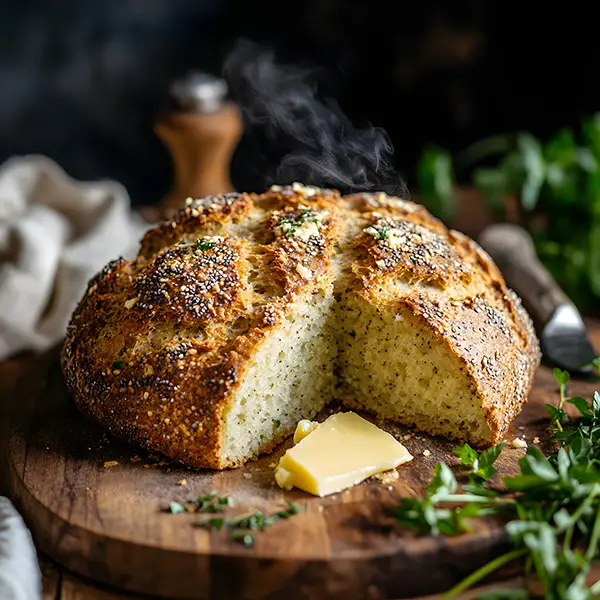
Amazing 5-Net-Carb Irish Soda Bread That Powers Your Ketogenic Transformation
Description
Ingredients:
2 cups almond flour
1/4 cup coconut flour
1/4 cup ground flaxseed
2 tablespoons psyllium husk powder
1 1/2 teaspoons baking soda
1/2 teaspoon xanthan gum
1/2 teaspoon sea salt
1 tablespoon caraway seeds (optional, for authentic Irish flavor)
3 large eggs
1/4 cup melted butter or ghee (cooled slightly)
1/3 cup unsweetened almond milk
2 tablespoons apple cider vinegar
1 tablespoon erythritol or monk fruit sweetener
1 tablespoon heavy cream (for brushing the top)
Instructions:
Preheat oven to 350°F (175°C) and line a baking sheet with parchment paper.
In a large bowl, whisk together almond flour, coconut flour, ground flaxseed, psyllium husk powder, baking soda, xanthan gum, salt, and caraway seeds (if using).
In a separate bowl, beat the eggs, then add melted butter, almond milk, apple cider vinegar, and sweetener. Mix well.
Pour the wet ingredients into the dry ingredients and stir until a sticky dough forms.
With wet hands, shape the dough into a round loaf about 6-7 inches in diameter.
Place the dough on the prepared baking sheet and score an "X" on the top with a sharp knife (about 1/2 inch deep).
Brush the top with heavy cream.
Bake for 40-45 minutes until golden brown and a toothpick inserted in the center comes out clean.
Allow to cool completely on a wire rack before slicing (very important for proper texture).
Store in an airtight container at room temperature for up to 3 days or refrigerate for up to a week.
Serving Suggestions & Meal Prep Tips:
Serve with grass-fed butter for an authentic Irish experience
Toast slices and top with smoked salmon and cream cheese for a protein-rich breakfast
Use as a base for open-faced avocado sandwiches
Freeze individual slices with parchment paper between each for quick access
Make mini loaves for portion control and easier freezing
Add a sprinkle of Irish cheddar on top during the last 5 minutes of baking for a savory variation
Pairs wonderfully with keto-friendly Irish stew or soup
Nutritional Values (per slice, based on 12 slices):
Calories: 165
Total Fat: 14g
Saturated Fat: 4g
Cholesterol: 62mg
Sodium: 240mg
Total Carbohydrates: 7g
Dietary Fiber: 4g
Net Carbs: 3g
Sugars: 1g
Sugar Alcohols: 1g
Protein: 6g
