
Transport yourself to the sun-drenched shores of the Mediterranean with this authentic yet keto-friendly Greek lamb souvlaki. This centuries-old recipe has been thoughtfully adapted to align with modern low-carb principles without sacrificing any of the bold, aromatic flavors that make Greek cuisine so beloved worldwide. Tender chunks of herb-marinated lamb are skewered alongside colorful vegetables and grilled to perfection, creating a harmonious balance of smoky char and succulent meat that practically melts in your mouth. Paired with a cooling homemade tzatziki sauce, this dish delivers an explosion of traditional Greek flavors while keeping carbs remarkably low. Perfect for everything from casual weeknight dinners to impressive outdoor entertaining, this keto souvlaki proves that weight loss can be both delicious and culturally rich, offering all the satisfaction of authentic Greek street food without derailing your nutritional goals.
History of Lamb Souvlaki
Lamb Souvlaki is a traditional Greek dish that dates back to ancient times, with its origins rooted in the culinary traditions of the Mediterranean. The term “souvlaki” comes from the Greek word souvla, meaning skewer, as the dish consists of marinated meat grilled on skewers over an open flame. Evidence of skewered meat consumption in Greece dates back to the Minoan civilization (2000–1100 BC) and later in ancient Athens, where street vendors sold grilled meats much like today.
Lamb has long been a staple protein in Greek cuisine due to its availability and significance in cultural and religious celebrations. Traditionally, Greek shepherds would cook lamb over an open fire, seasoning it with local herbs like oregano, thyme, and garlic. Over time, the dish evolved, with the introduction of marinades using olive oil, lemon juice, and vinegar to tenderize and enhance the meat’s flavor.
Today, Lamb Souvlaki remains a popular Greek street food and a staple in Greek tavernas. Often served in pita bread with tzatziki, tomatoes, onions, and lettuce, it is enjoyed worldwide as a delicious, protein-packed meal that embodies the essence of Mediterranean cuisine.
History of Tzatziki
Tzatziki is a classic Mediterranean and Middle Eastern sauce with deep historical roots, originating in ancient Greece and the Ottoman Empire. This refreshing yogurt-based dip is made with strained yogurt, cucumber, garlic, olive oil, and fresh herbs like dill or mint, offering a cooling contrast to grilled meats like souvlaki.
The name “tzatziki” is derived from the Turkish word “cacık,” which refers to a similar yogurt-based dish. The dish itself has evolved from early Greek and Persian influences, where strained yogurt was commonly used in sauces and dips due to its creamy texture and probiotic benefits. The addition of cucumbers and garlic became prominent as the dish spread throughout the Eastern Mediterranean and the Balkans.
In Greece, tzatziki became a staple accompaniment to grilled meats, gyros, and pita bread, valued for its tangy, creamy texture and refreshing taste. Over time, different regional variations emerged, incorporating ingredients like vinegar, lemon juice, and a variety of herbs.
Today, tzatziki is widely enjoyed beyond Greece, featured in Mediterranean diets worldwide. Its cooling properties and health benefits, including probiotics from yogurt and antioxidants from garlic and cucumber, make it a favorite in both traditional Greek meals and modern healthy cuisine.
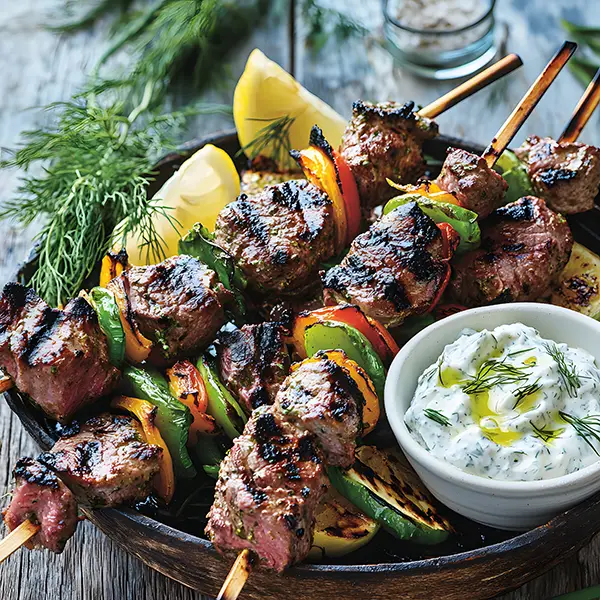
The Ultimate Fat-Burning Lamb Souvlaki That Revolutionizes Your Keto Results
Description
Ingredients:
For the Lamb Souvlaki:
2 pounds boneless leg of lamb, trimmed and cut into 1.5-inch cubes
1/4 cup extra virgin olive oil
3 tablespoons fresh lemon juice
4 cloves garlic, minced
1 tablespoon dried oregano
1 tablespoon fresh rosemary, finely chopped
1 tablespoon fresh thyme leaves
1 teaspoon dried mint
1 teaspoon sea salt
1/2 teaspoon freshly ground black pepper
1/2 teaspoon ground cumin
1/4 teaspoon ground coriander
Zest of one lemon
For the Tzatziki Sauce:
1 1/2 cups full-fat Greek yogurt
1 medium cucumber, peeled, seeded, and finely grated
2 cloves garlic, minced
1 tablespoon extra virgin olive oil
1 tablespoon fresh lemon juice
1 tablespoon fresh dill, chopped
1/2 teaspoon sea salt
1/4 teaspoon white pepper
For Serving:
2 tablespoons olive oil for grilling
1 red onion, cut into 1-inch chunks (for skewers)
1 large bell pepper (green or red), cut into 1-inch chunks
Fresh lemon wedges
Fresh herbs for garnish (oregano, thyme, mint)
Instructions:
For the Lamb Marinade:
In a large bowl, combine olive oil, lemon juice, garlic, oregano, rosemary, thyme, mint, salt, pepper, cumin, coriander, and lemon zest.
Add the lamb cubes and toss to coat thoroughly.
Cover and refrigerate for at least 4 hours, preferably overnight (up to 24 hours for maximum flavor).
For the Tzatziki Sauce:
Place the grated cucumber in a clean kitchen towel and squeeze out excess moisture.
In a medium bowl, combine the Greek yogurt, drained cucumber, minced garlic, olive oil, lemon juice, dill, salt, and white pepper.
Mix well, cover, and refrigerate for at least 1 hour before serving to allow flavors to develop.
For the Souvlaki:
If using wooden skewers, soak them in water for at least 30 minutes before grilling.
Preheat grill to medium-high heat (approximately 400°F/200°C).
Remove lamb from marinade and pat pieces lightly with paper towels to remove excess moisture.
Thread the lamb pieces onto skewers, alternating with red onion and bell pepper chunks.
Brush the assembled skewers lightly with olive oil.
Grill for 3-4 minutes per side, rotating 2-3 times, until the lamb reaches an internal temperature of 135°F for medium-rare or 145°F for medium (about 10-12 minutes total).
Transfer to a platter and let rest for 5 minutes before serving.
Serving Suggestions & Meal Prep Tips:
Serve souvlaki skewers over a bed of fresh arugula or with a side of Greek salad (tomatoes, cucumber, feta, olives, red onion).
For a complete keto meal, serve with roasted cauliflower "rice" seasoned with lemon and oregano.
Make a low-carb gyro bowl with tzatziki, feta cheese, cucumber, tomato, and olives.
Prepare tzatziki up to 3 days ahead and store in an airtight container in the refrigerator.
Marinate lamb up to 24 hours ahead for even more flavor development.
For meal prep, grill skewers and store separately from tzatziki. Reheat lamb gently in a 300°F oven for 5-7 minutes.
Make extra tzatziki to use as a vegetable dip throughout the week.
Leftover grilled lamb can be sliced thin and added to salads or wrapped in lettuce leaves for quick lunches.
Freeze marinated, uncooked lamb in an airtight container for up to 3 months. Thaw overnight in the refrigerator before grilling.
Nutritional Values (per serving, assuming 6 servings):
Calories: 410
Fat: 31g
Protein: 32g
Net Carbs: 4g
Fiber: 1g
Total Carbs: 5g
Sodium: 650mg
Potassium: 520mg
Vitamin C: 45% DV
Calcium: 8% DV
Iron: 15% DV
Vitamin B12: 60% DV
Zinc: 35% DV
